Day X
Day X
Last time I posted, it was Day 2. I was in the library, mapping Jeffrey’s planning methodology, feeling momentum for the first time. That was February 12th.
It’s March 13th. A month gone. Here’s what happened.
The Spiral
After Day 2, I kept working. The car got fixed thanks to a kind stranger. I had mobility again. I was gathering context, building out the planning docs for monkeybee-pdf, filming videos, grinding in libraries until they closed and then hunting for 24/7 diners with WiFi to squeeze out more hours.
But something was off. My hip started hurting — badly. Five days of worsening pain, limping, can’t sit still, can’t focus. I went to the ER on February 22nd. They brushed me off. Meanwhile, I’d just gone through the worst breakup of my life (only relationship, too), I was sleeping in my car, and the ambient anxiety of watching the world change around AI while being resource-constrained was becoming crushing. Not the productive kind of pressure. The kind that compresses you.
On February 23rd, I checked myself into an inpatient psychiatric facility.
The Diagnosis
Bipolar disorder. They put me on lithium that first night.
I’m going to be straightforward about this because I said from Day 1 that I’d chart the failures alongside the successes, and this is the most important thing I’ve learned so far on this journey — more important than any Rust crate or planning methodology.
I’ve been fighting what felt like an invisible current. Periods of insane energy and clarity where I feel like I can take on everything, followed by collapses where I can barely function, but force myself through regardless. I thought that was just life. I thought everyone dealt with that and I was just worse at managing it. Turns out there’s a name for it, and there’s a pill for it.
I spent about two weeks inpatient. I didn’t have my laptop — just my phone. I was on Claude mobile planning when I could. I even thought about setting up a VPS so I could code from my phone in there. Jeffrey sent me more Claude passes. He told me to try to do a bit of work every day if I could. He said he believed in me. That meant a lot from a guy I’ve never met in person who was dealing with his own shingles pain (that he worked himself into from being a bleeding edge agent wrangling addict).
Why “Day X”
I’m not calling this Day 31 or whatever the math works out to. The sequential numbering broke. Life broke it. I could pretend I was still on track, renumber things, sanitize the timeline. But that would be exactly the kind of fake, polished process documentation that nobody actually learns from.
“X” is an unknown. A variable. Something to solve for.
It’s also a reset. I’m not the same person who wrote Day 2. I have a diagnosis. I have medication. I have a clearer understanding of what’s been sabotaging me my entire adult life. The fog I described in Day 1 — where I couldn’t focus, left the library after 7 hours when I had 12 — I now know what that was.
The Suitcase Server
Two days ago — March 11th — I walked into a university library carrying a suitcase with a desktop computer inside it. I am not a student there.
The plan was simple: bring the desktop and a monitor, set up SSH and networking so the machine auto-connects to my laptop’s hotspot, and then I’d never need a monitor for it again. I could just plug it in anywhere with a power outlet, and it becomes a headless build server I control from my laptop. Agent swarming infrastructure, assembled from a library table.
The plan immediately fell apart.
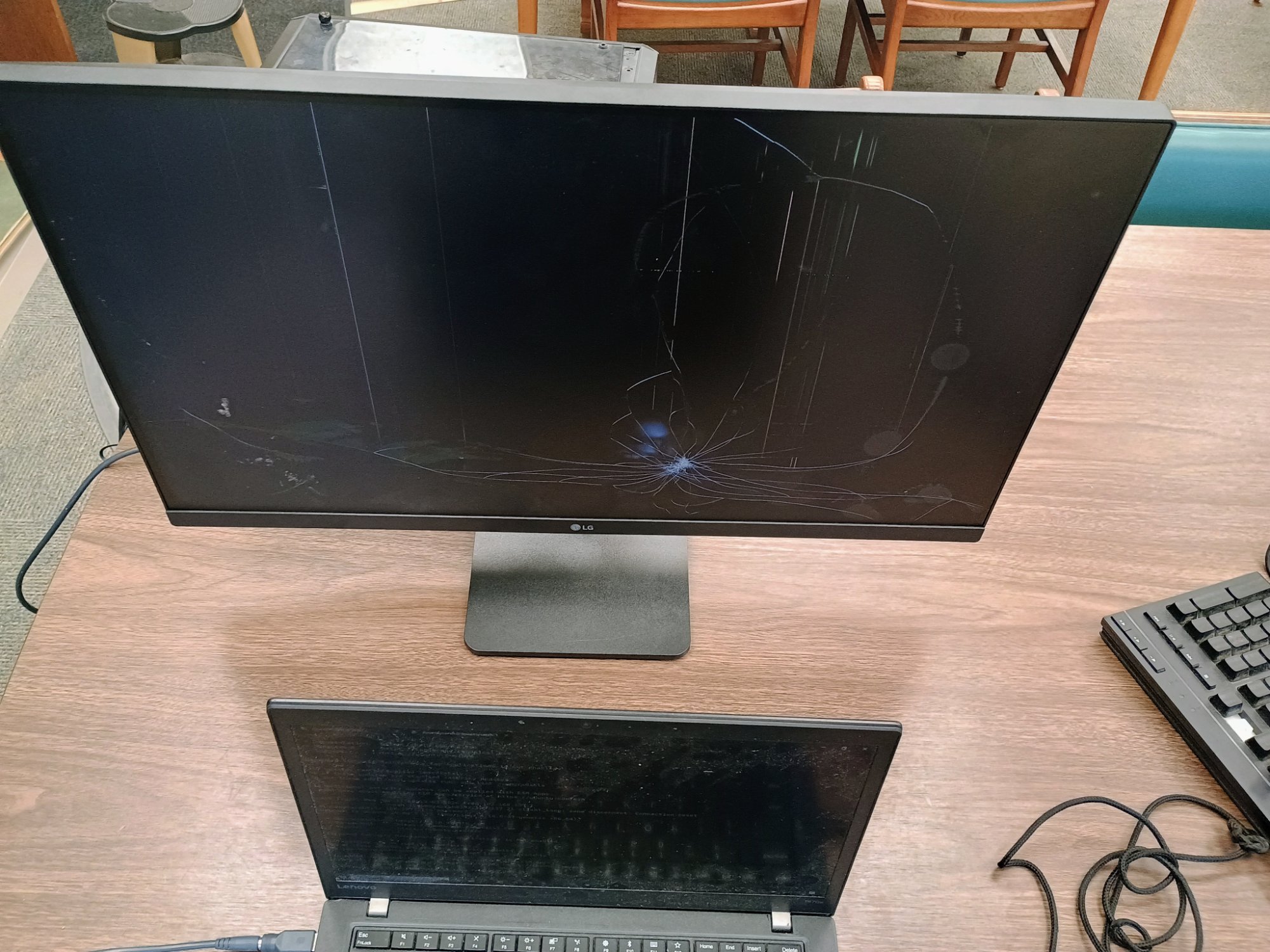
I opened the trunk and the monitor was cracked. Spider-webbed right through the center. Must have shifted during one of the drives. So now I’ve got a desktop with no display, sitting in a library where I’m not a student, and I need a screen to configure the OS.
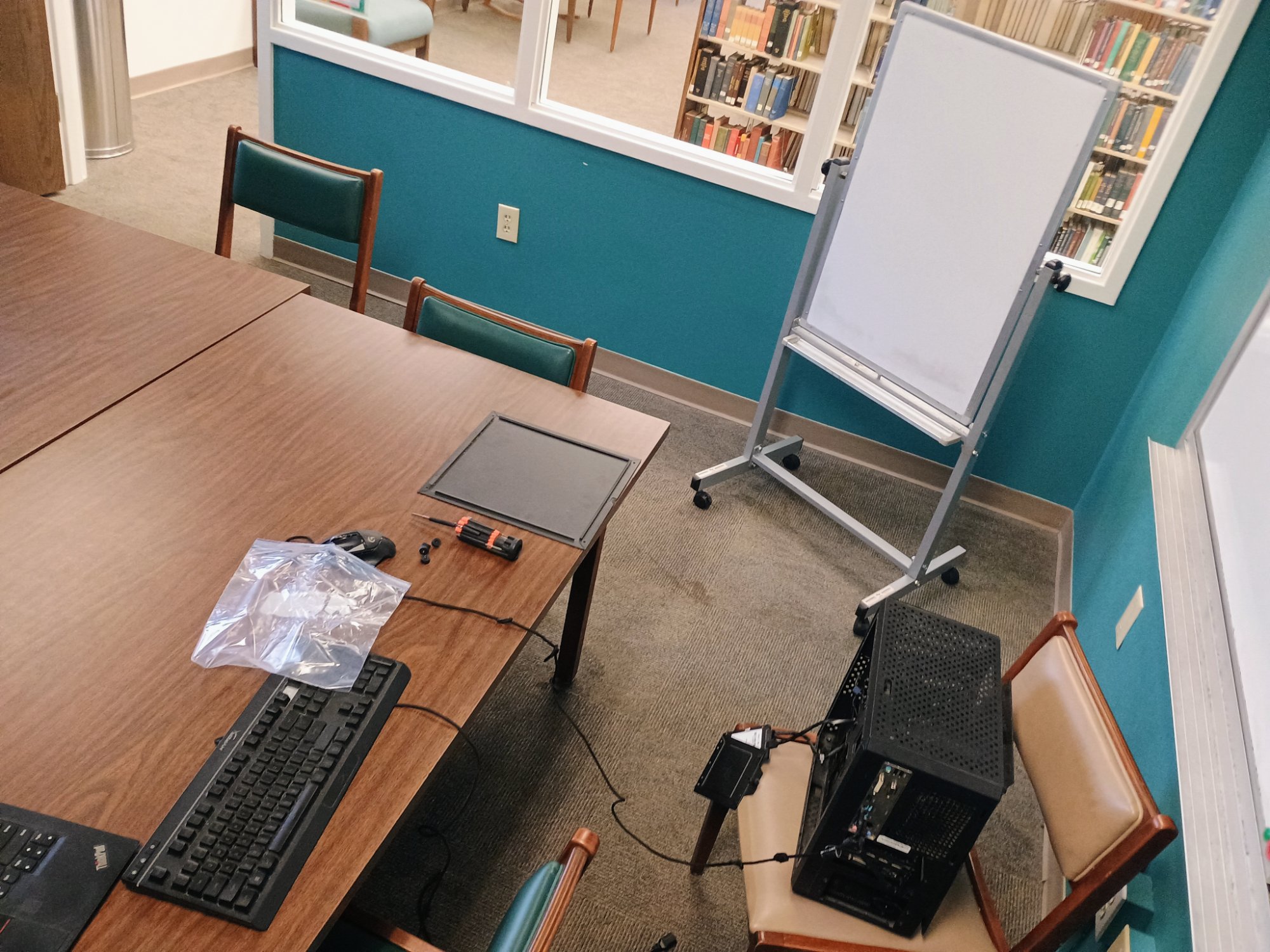
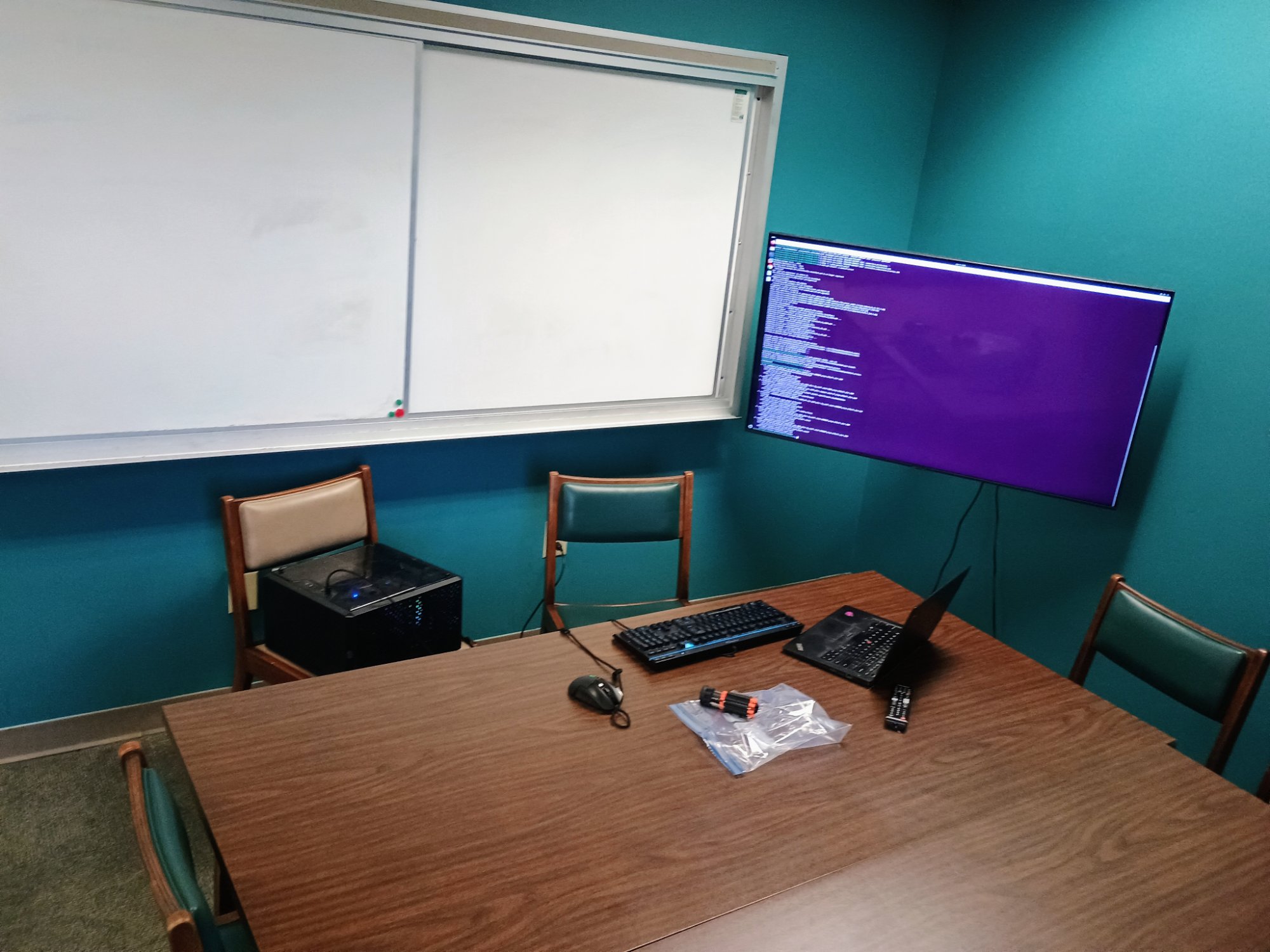
I’d noticed the study rooms had TVs mounted on the walls. HDMI in. I didn’t want to ask anyone for anything — it was already weird enough that I’d walked in with a suitcase full of computer parts. So I found an empty study room and set up in there.
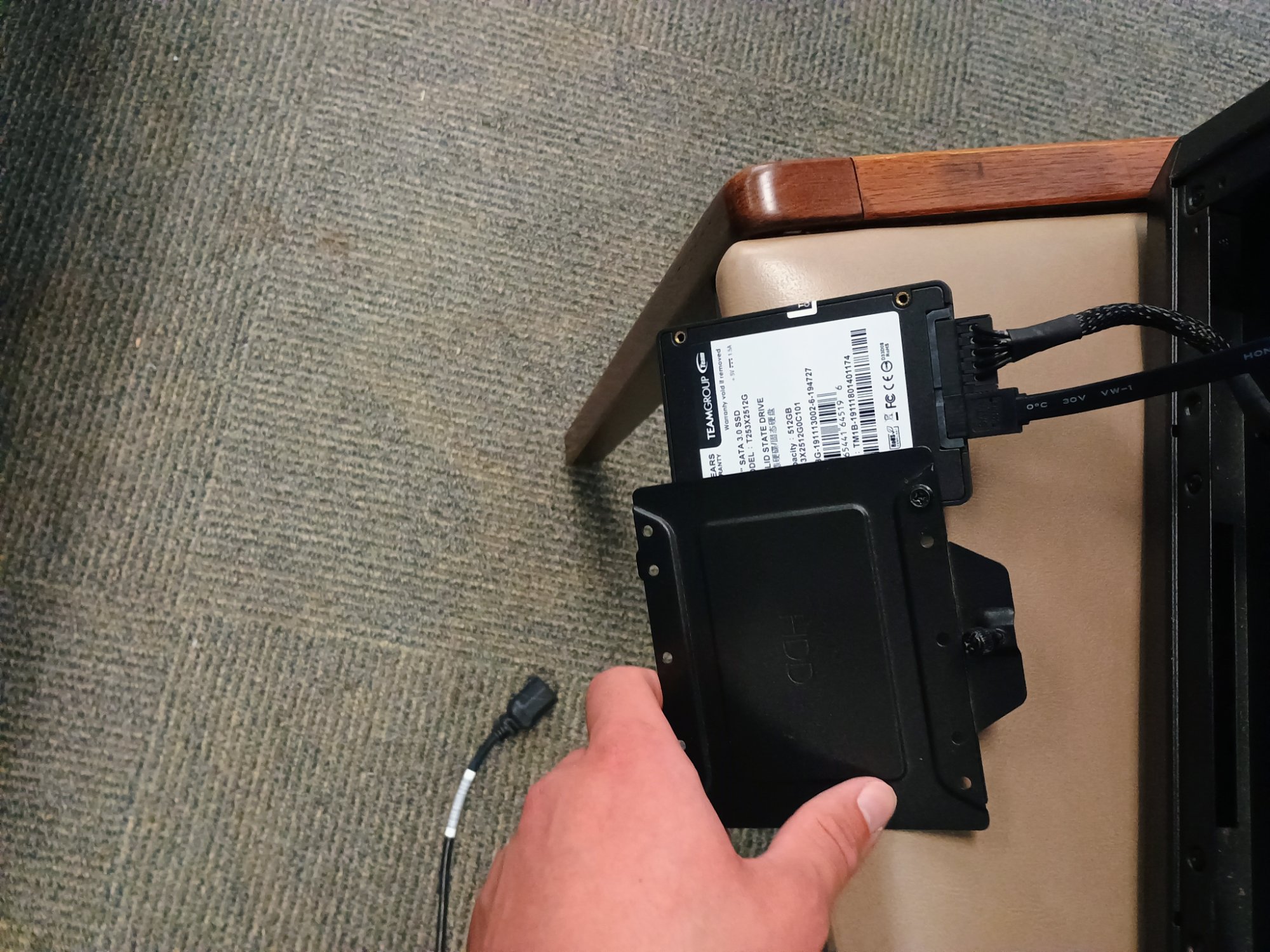
I cracked open the case, plugged in the keyboard, connected the HDMI to the room’s TV, hit power — and got stuck in BIOS. No boot drive detected. Then I remembered: I’d pulled the SSD out weeks ago and thrown it in my backpack. It had been riding around with me this whole time. A TeamGroup 512GB SATA drive, just sitting in a bag pocket.
I pulled out my screwdriver, mounted the SSD back into the caddy, plugged it into the board, and booted into Ubuntu. From there I configured the SSH server, set up the networking to auto-connect to my laptop’s hotspot on boot, tested it, confirmed I could SSH in cleanly. Packed everything up, went back to the common area. By then it was close to closing.
But now the machine is ready. I’ve scoped out spots. I literally just need a power outlet. Plug the desktop in, it boots, grabs my hotspot, and I SSH in from the laptop. Full build environment. Agent swarming capability. No monitor, no desk, no office — just a black box under a table somewhere and a terminal on my ThinkPad.
Where Things Stand
I’m writing this from a university library at 8:26 PM. It closes at 10. I’ll keep working after.
The PDF project is alive and entering the build phase. Tonight I’m running the spec through Automated Prompt Reviewer Pro. Tomorrow is beads conversion and polish. If those are tight, agent swarming begins tomorrow or Sunday — on the headless desktop I just described.
I had a job interview for a night security guard position (and have more lined up). If I land it, that’s agent subscription money and a quiet overnight environment to run builds/swarms.
What I Learned
- Your brain is infrastructure. If the infrastructure is broken, nothing you build on top of it will hold. Getting diagnosed and medicated wasn’t a detour from the mission — it was the most critical dependency.
- Constraints force invention. A cracked monitor turned into a headless server architecture. I now have a more capable setup than if the monitor had survived — because I was forced to make the machine fully autonomous. The best solutions I’ve found on this journey have all come from things going wrong.
- People show up for you in ways you don’t expect. Jeffrey, the person who fixed my car, the people who sent Claude passes after Jeffrey posted about my situation — none of them had to do any of that. Positive propagation is real.
- There’s no shame in the psych ward. There’s shame in knowing something is wrong and refusing to address it because you think you should be able to brute-force through everything. I tried that. It doesn’t work ALL of the time, but you have to still push. Get the diagnosis. Take the lithium. Get back to work.
- The gap is part of the story. Day 1, Day 2, Day X. That’s more honest than Day 1 through Day 31 of uninterrupted grind content. Nobody’s journey is linear. Mine sure as hell isn’t.
I told you I’d document everything — the code, the strategy, the wins, and the failures. A month-long gap and a psych ward stay qualify as the latter. But I’m medicated, I’m mobile, I’ve got a headless build server that runs off a hotspot, and the spec is about to become code. Day X+1 starts tonight.